ode.to StudioAll workBook a discovery call
← All work
ReportingA membership brand

A dashboard the owner can finally trust.

What shipped
I built a membership brand one live view of its ads, traffic, members and money, then did the less visible work: making sure the data behind every number is tracked, allocated and checked.
Why
Most owners have more data than ever and still can't get a straight answer on how the business is doing. Every platform reports its own version, and none of them shows the whole picture.
What it was worth
The owner can check the business from one screen and act on what it says, because the numbers tie back to real invoices and the books.

You have the data. You don't have the answer.

If you run a business online, you probably know this routine. Open the ad accounts. Open analytics. Open the platform that takes your payments. Each one gives you a number, the numbers don't agree, and you end up deciding based on whichever one feels closest.

A membership brand I work with was doing exactly that every day.

One screen for the whole business

I built the brand one dashboard that brings it together: ads, traffic, search, members and the monthly books, refreshed on its own through the day. That alone is worth having. Nobody has to assemble the picture by hand anymore.
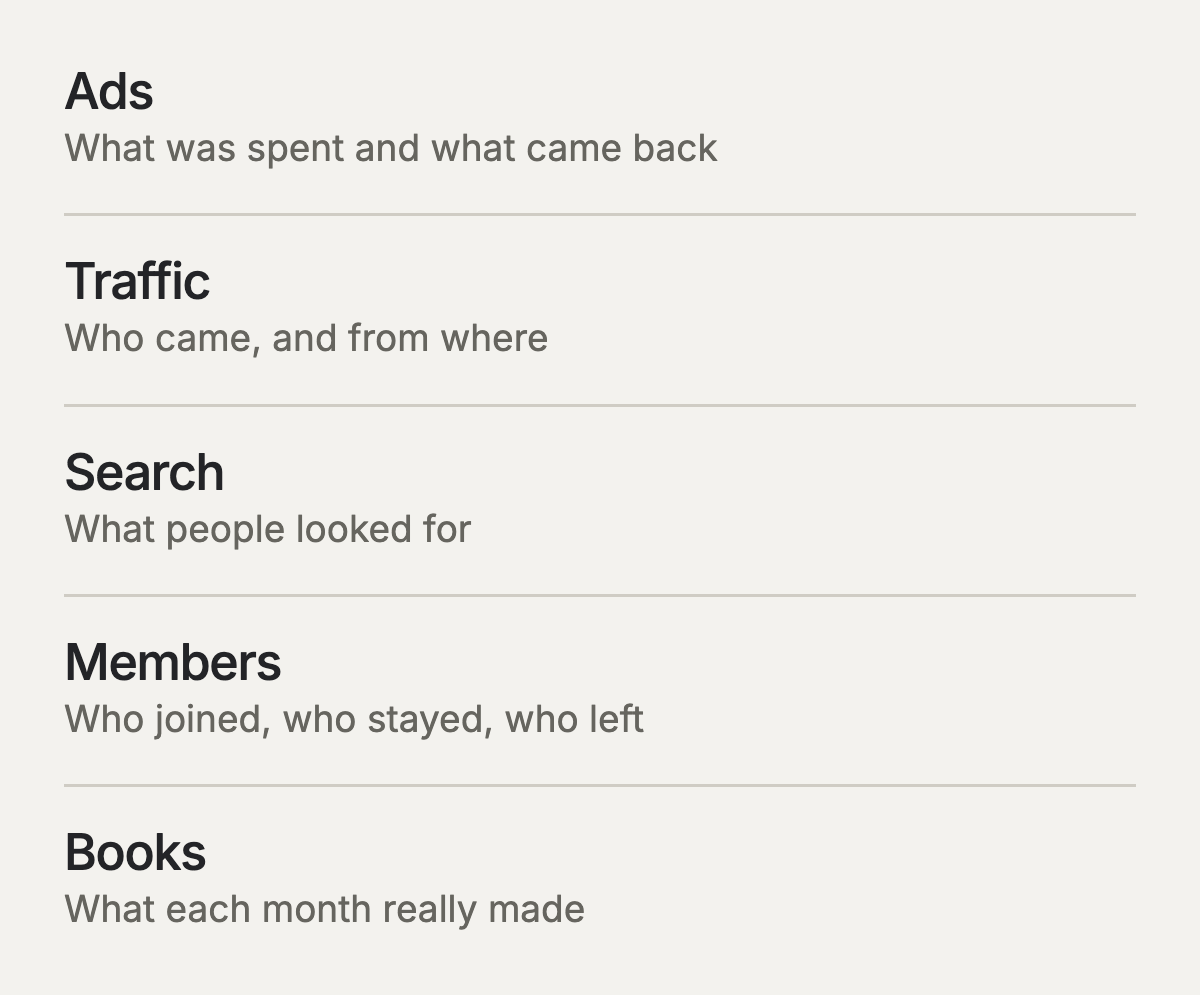
What the one screen covers: ads, traffic, search, members and the books

Building it was the easy part

A dashboard can look right and still be wrong, and the hardest work here was closing that gap.

The screen is only as good as what feeds it. So the real job is the system underneath: deciding what gets tracked and how, where each sale and each dollar gets allocated, and writing down how every number is calculated so it means the same thing next month. Then you use it, and you keep checking it against the source, because data drifts.
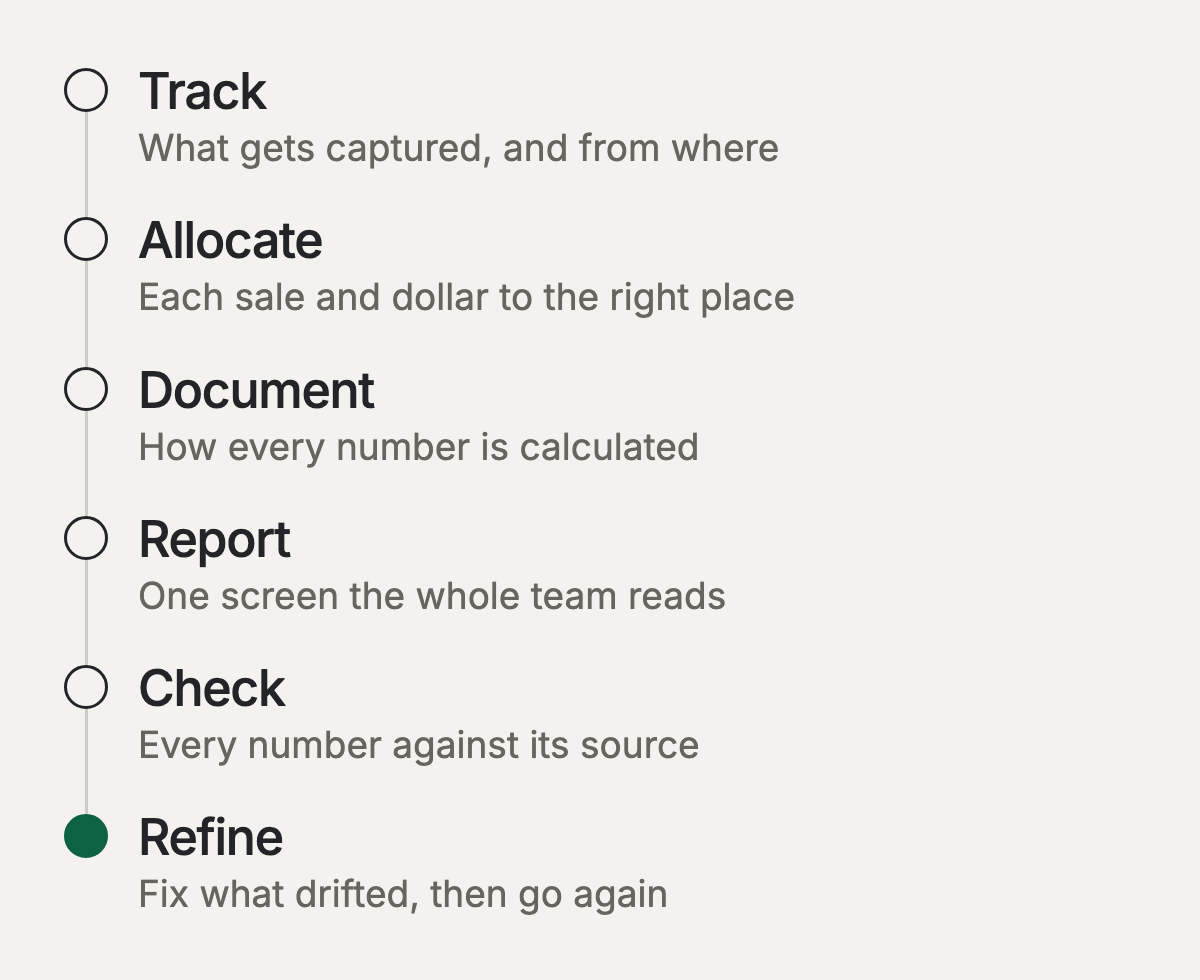
The system underneath: track, allocate, document, report, check, refine

On this build, one quiet tracking error had the dashboard counting only about a third of purchases before I caught it. Nothing on the screen looked broken.

Numbers you can act on

Now purchases tie to real invoices, and closed months come straight from the books. When something looks off, there's a trail back to where the number came from. The owner and the team work from the same figures, in the same portal they use to run everything else, so a conversation about ads or a promotion can start from what actually happened.

Software around the business

Most businesses have a dashboard of some kind, or a report someone trusts out of habit. Ask what each number is checked against. If nobody can answer that, it's where I'd start.

Stack
Next.js, Convex, n8n and the APIs for Meta, Google Ads, GA4, Search Console, Stripe and Klaviyo. Built with Claude Code.
Replaced

More work

Why rent software when you can own software?

  1. You pay forever and own nothing.

    Most businesses rent a stack of software, use a slice of each, and pay for all of it forever. None of it talks to the rest, the bill grows every year, and your data lives on someone else's terms.

  2. Software built around your operation.

    I build around what your operation actually needs. Keep what earns its place, build what's missing, cut the rest. Everything connects: an order, a question, a lead, a product in development.

Every layer of your system belongs to you.

  1. Your accounts

    Site, email, ads, analytics and every login, in your name from day one.

  2. Your own server

    A private server in your name. Your data and your automations live on it, not on mine.

  3. Your automations

    Your own automation platform, running the follow-ups, syncs and reports.

  4. AI in the workflows that earn it

    Drafting, sorting, summing up. Only where it saves real time, and always checked.

  5. One dashboard for the whole business

    Business, marketing, sales and support, read from one screen every morning.

“If you have the opportunity to work with Chris, I highly recommend you take advantage of the opportunity.”

Ren CostantiniSEO Expert

How we start working together.

Forty-five minutes

A discovery call.

Where the business is today, how it actually runs, and what's in the way. I'll tell you plainly what I see, and you leave with real suggestions and a clear next step.

Usually a paid audit

An audit, or one clear first project.

I go under the hood of your marketing, your numbers, your tools and your processes, and bring back a picture of the business you've likely never seen. Sometimes the first fix is obvious, and we start there.

  • AdsWasted spend
  • WebsiteLeaks in the funnel
  • EmailNo email after the first sale
  • TrackingSales you can't trace to a channel
  • AutomationOrders retyped between tools
  • AILeads waiting hours for a reply
  • SoftwareRented tools you could own
The easy wins first

You see tangible results.

The first project goes after the low-hanging fruit: the fixes that cost the least and show up the fastest. You get a result you can point to before we plan anything bigger.

Everything the audit found

Then we go deeper.

Expect an audit to turn up more than one project. We rank them, take the one that matters most, and reanalyze after each before moving on to the next.

Start here

It starts with an honest conversation.

Tell me about the business below so that we can both come to a conversation worth our time. You'll leave knowing what I'd do next if I were in your shoes.

What would you like help with?
Pick a time · 45 minutes